Antler Chandeliers and Lighting: How to Choose, Hang and Style Them
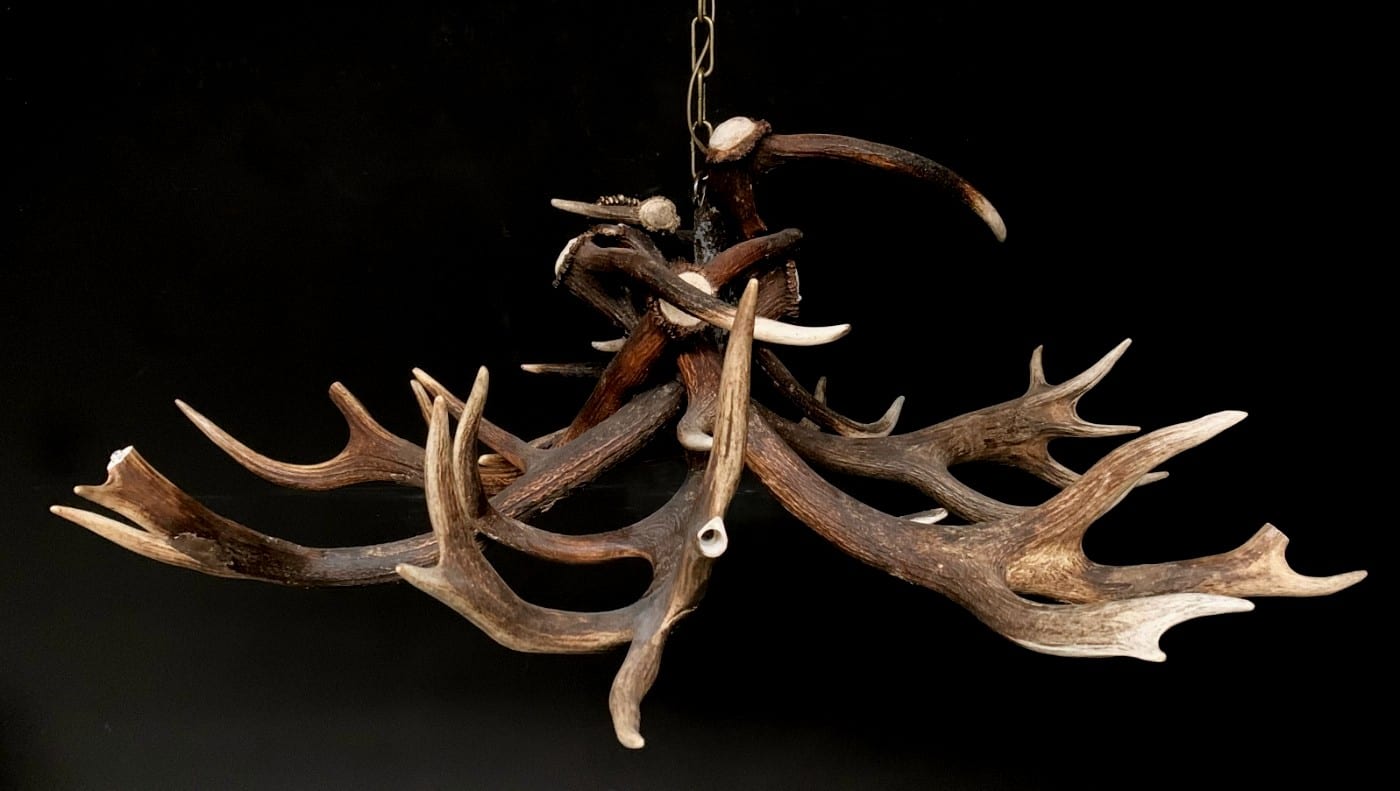
An antler chandelier is the one piece of natural history decor most people are willing to try first. It hangs above eye level, it does a job, and nobody has to make eye contact with it over dinner.
It is also the piece most often bought at the wrong size. This guide covers sizing, hanging, wiring and styling — the four things that decide whether the fixture looks commissioned or improvised.
Getting the size right
Two measurements matter, and most buyers only check one.
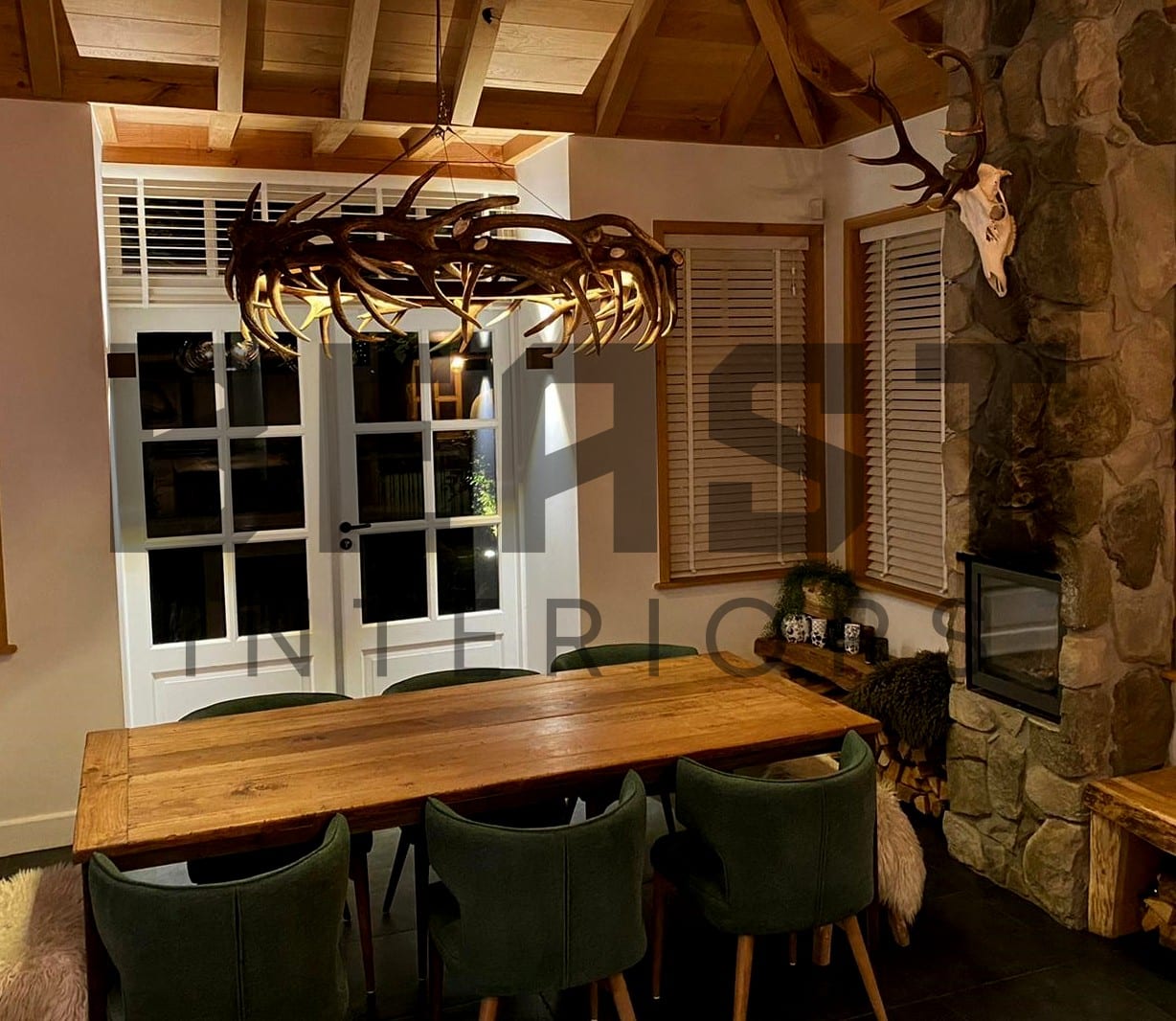
Diameter against the table. The chandelier should be roughly half to two-thirds the width of the table below it. On a 90 cm wide table, that means a fixture of about 45–60 cm across. Going wider looks top-heavy and puts tines where people’s heads go when they stand up.
Diameter against the room. For a fixture in an open space rather than over a table, add the room’s length and width in metres and treat that number as a diameter in centimetres. A 5 × 4 m room gives you roughly 90 cm — a large chandelier, and a genuinely big antler piece.
If the two numbers disagree, follow the table. A chandelier over a table is read in relation to the table, not the room.
Hanging height
Over a dining table, the lowest point of the fixture should sit 75–85 cm above the tabletop. That clears sight lines across the table while keeping the light close enough to pool usefully.
Everywhere else, keep the lowest tine at least 210 cm above the floor. People do not look up while walking, and antler tines are unforgiving.
Two adjustments worth making:
- Ceilings above 3 m: add roughly 7 cm of drop for every additional 30 cm of ceiling height, or the fixture will look stranded.
- Sloped or chalet ceilings: measure from the lowest point of the slope, not the ridge, and check the swing clearance if the chain is long.
Real antler, shed antler and cast
Three things get sold as antler lighting, and the price differences are large.
Naturally shed antler is collected after deer cast their antlers each year. No animal is harmed and nothing is hunted for the fixture. This is the most straightforward option ethically and the one most buyers are looking for.
Antler from culled or hunted animals is a by-product of population management that would otherwise be discarded. Whether that sits comfortably with you is a personal judgement, but it is legal for common European deer species and is not a conservation concern.
Cast resin replicas exist and are considerably cheaper. They are lighter, which simplifies mounting, but they read as plastic at close range — the surface is too even, and it lacks the pitting and colour variation of real bone. If you have real pieces elsewhere in the room, a cast fixture beside them will look wrong.
Ask which one you are being sold. A reputable seller answers immediately. For the wider question of what is legal to buy and own, see our guide to buying taxidermy legally and ethically — antler from common deer is unrestricted, but the same is not true across all species.
Wiring, weight and mounting
Antler fixtures are heavier than they look. A mid-sized red deer chandelier can run 15–25 kg, and a large moose piece considerably more.
Three practical points:
- Fix into a joist or a proper ceiling anchor, never into plasterboard alone. If you cannot find a joist, a spreader plate above the ceiling is the correct fix.
- Check the wiring on antique pieces. Older converted fixtures often carry cloth-insulated cable that is no longer compliant. Rewiring is inexpensive and routine — treat it as expected on anything pre-1980, not as a defect.
- Confirm the drop is adjustable before purchase. Chain is easy to shorten, a fixed rod is not.
Have an electrician hang anything over about 10 kg. This is not a fitting to learn on.
Bulbs: the detail that decides everything
The single most common mistake is cool-white bulbs. Antler is a warm, creamy material with brown and grey shading; cool light turns it grey and clinical.
Use 2700K, and no higher than 3000K. Choose bulbs with a colour rendering index (CRI) above 90 if you can — antler has subtle colour variation that low-CRI light flattens completely.
Candle-shaped or exposed-filament bulbs suit the form better than frosted globes, because the fixture is visually open and a diffused bulb inside it looks like a mistake. Keep the total output moderate and put it on a dimmer: an antler chandelier is atmosphere lighting, and it is rarely the only light source a room needs.
Styling it so it doesn’t read as a hunting lodge
The lodge association comes from context, not from the fixture. An antler chandelier in a room with tartan, dark timber panelling and three mounted heads reads exactly as you would expect. The same fixture above a plain plaster ceiling, a simple oak table and modern chairs reads as sculpture.
Three tactics that work:
- Let it be the only antler in the room. If you also want antler furniture or mounted antlers on the wall, put them in a different room or accept that the room now has a theme.
- Keep the surroundings plain. A white or single-colour ceiling, an uncluttered table, and restraint elsewhere.
- Mix eras deliberately. Modern chairs under an antique fixture is a far stronger look than matching everything to the same period.
Browse the current antler lighting collection, or see the full range of antler furniture and accessories if you want the material in a lower-commitment form.
Maintenance
Antler is bone. It is durable, but it is not indifferent to its environment.
Dust it every few months with a dry, soft brush — a clean paintbrush is ideal for getting between tines. Never use water, and never use furniture polish or oil, which darken the surface unevenly and attract more dust.
Keep it out of direct sunlight, which bleaches antler to a chalky white over years, and away from the direct path of underfloor heating vents, which can dry and crack it. The same environmental principles apply across everything in this category — see how to care for taxidermy for the full detail.
Frequently asked questions
How many bulbs should it have? Six to twelve for a dining chandelier, depending on size. More small bulbs at low output looks better than a few bright ones.
Can I hang one over a kitchen island? Yes, but expect to clean it more often. Airborne grease attracts dust, and antler is awkward to degrease.
Do the antlers yellow over time? Slightly, and it generally improves the look. Rapid or uneven yellowing usually means UV exposure, not age.
Is it suitable for a low ceiling? Below about 2.4 m, choose a smaller, flatter fixture or a wall light instead. A full chandelier in a low room dominates awkwardly.
For placement across the rest of the house, see the main guide to taxidermy in interior design, or contact us with your ceiling height and table size and we will tell you what fits.