Taxidermy in Interior Design: The Complete 2026 Guide
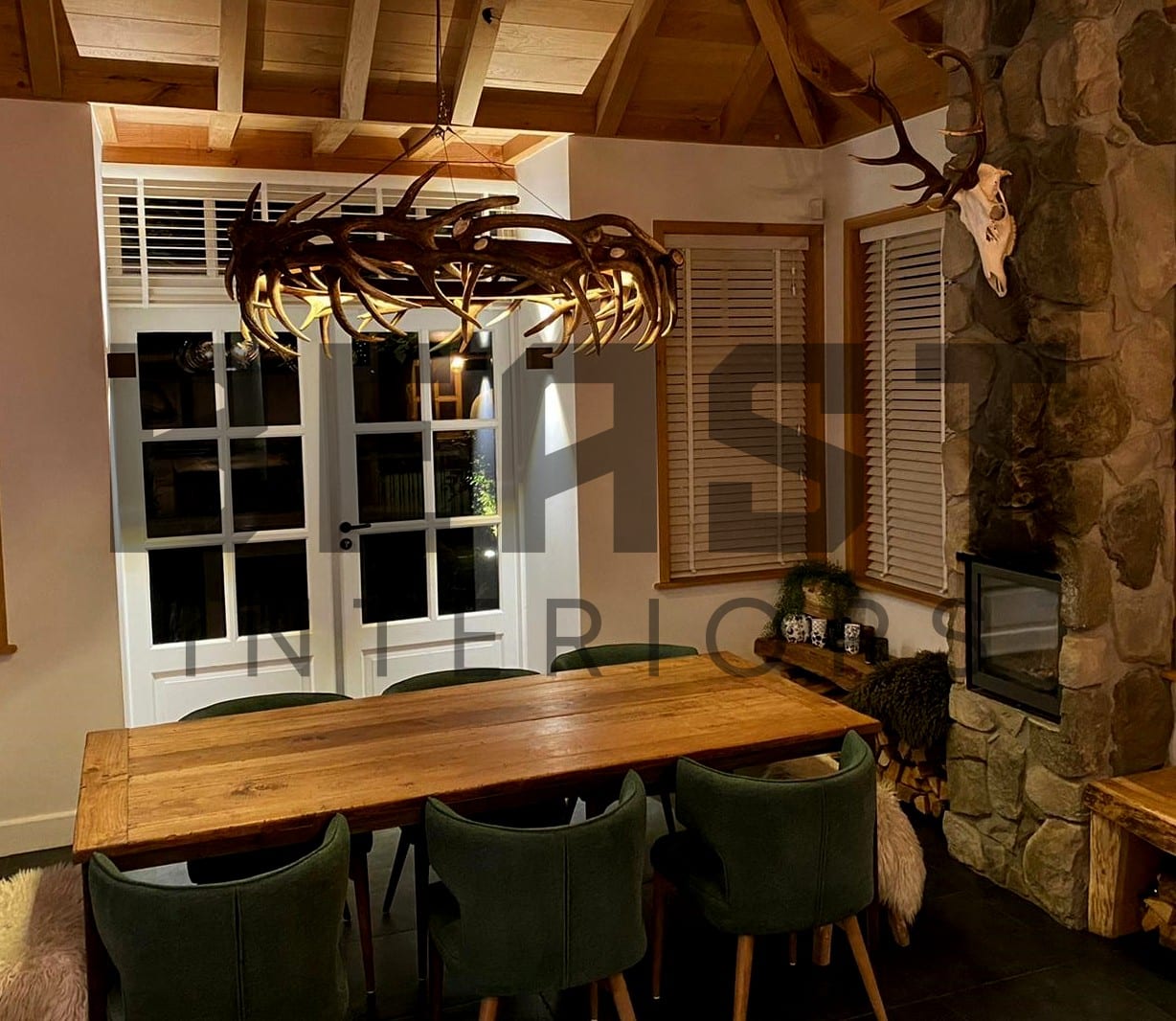
For most of the last decade, interiors advice pointed in one direction: strip it back. Paint it white, clear the surfaces, buy the matching set. That advice has quietly reversed. The rooms people actually want to live in now are layered, collected and a little strange — and natural history objects have moved from the margins back into the middle of the conversation.
This guide covers what has changed, how to choose a first piece, and how to place taxidermy so it reads as considered rather than chaotic.
Why natural history is back
The shift is not really about animals. It is about the collapse of the all-white interior. Designers looking at 2026 describe a move away from stark minimalism toward layered spaces, natural materials and earth-inspired palettes, with homes rooted in craftsmanship and personal meaning rather than showroom neutrality.
Taxidermy sits precisely in that gap. A mounted head, a dome of iridescent beetles or a pair of antlers does three things a catalogue object cannot: it is genuinely one of a kind, it carries visible age and craft, and it gives a room a focal point with real presence. Museums have understood this for two centuries — the Natural History Museum’s collections are, at heart, an argument that specimens are worth looking at closely.
The other reason is practical. Antique and vintage pieces are, by definition, already made. Buying an existing mount is a form of reuse, and it sidesteps most of the ethical objections that attach to newly produced work — a point we cover properly in our guide to buying taxidermy legally and ethically.
Start with scale, not species
The most common mistake is buying the animal you like rather than the object that fits the wall.
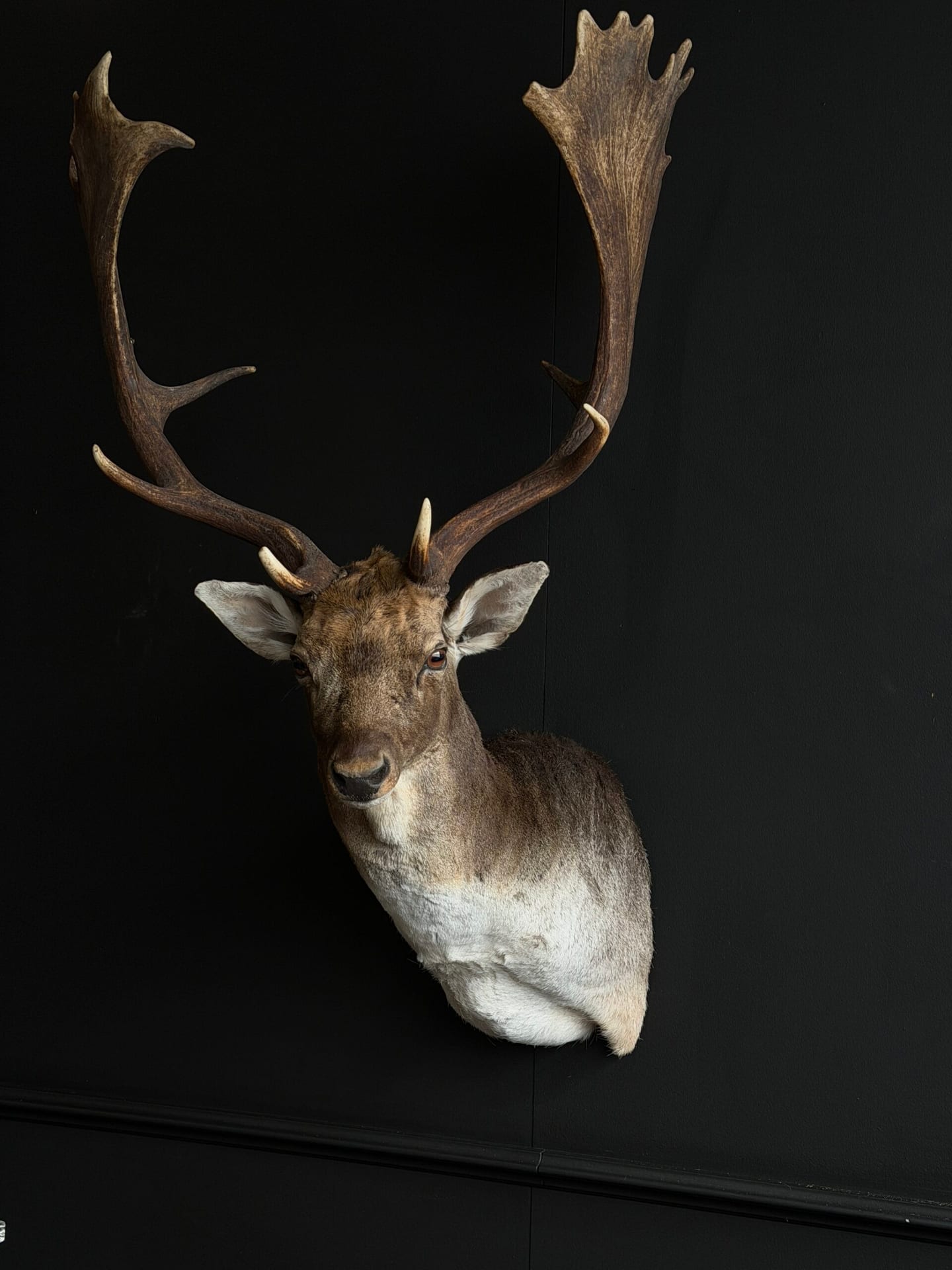
Before you fall for anything, measure. A red deer shoulder mount typically projects 60–90 cm from the wall and needs roughly twice its own width of clear space around it to breathe. A full mount is furniture: it occupies floor area, blocks circulation and needs a sight line from the doorway. A dome of butterflies needs nothing but a shelf.
A workable rule: the piece should be either clearly the largest object on that wall, or clearly a small object within a larger arrangement. The awkward middle — a medium mount competing with a medium mirror — is what makes rooms feel cluttered.
Room by room
Hallways and stairwells are the easiest win. They are transitional, you pass through them rather than sit in them, and a single strong piece at the turn of a stair does more work than three pieces in a living room. High ceilings also solve the projection problem.
Living rooms want restraint. One significant mount above a fireplace or sideboard, and then nothing else competing at that height. If you already have art on that wall, choose antlers or a skull instead — they read as sculpture and sit more quietly alongside pictures.
Dining rooms are where antler lighting earns its place. A chandelier is already expected over a table, so an antler version reads as a considered choice rather than a statement about hunting. It is also the one position where the piece is above eye level and out of the way.
Studies, libraries and bars take the most density. This is where a genuine cabinet-of-curiosities arrangement works: domes and bell jars, skull replicas and casts, naturalia and books together, on shelves, at close viewing distance.
Bedrooms are the one room to be careful with. Anything with a direct forward-facing gaze is difficult to live with at close range. Birds in profile, insects under glass, or a hide underfoot work far better than a head above the bed.
Mixing it with what you already own
Taxidermy is easier to place than people expect, because it is visually neutral in colour — browns, creams, blacks and greys — and reads as texture rather than pattern.
It works best against a plain, mid-to-dark wall. White walls flatten a mount and expose every bit of dust; a deep green, oxblood or charcoal ground makes the same piece look intentional. If repainting is not an option, mount the piece on a panel or inside an alcove to create that darker ground locally.
Pair it with materials that share its age: patinated timber, old leather, brass, unpolished stone. Avoid placing a genuine antique mount directly beside a high-gloss modern surface unless the contrast is the point and everything else in the room supports it.
For a softer entry, hides and cowhides introduce the same natural texture at floor level without any of the confrontation of a mount, and antler furniture and accessories put the material into objects you use daily.
Light it properly or don’t bother
Lighting is the single biggest difference between a mount that looks like a museum piece and one that looks like a jumble-sale find.
Three principles carry most of the weight:
- Light from above and slightly in front, at roughly 30 degrees. This is how fur and feather were meant to be seen; flat frontal light kills all the depth.
- Use warm light, 2700–3000K. Cool white makes preserved skin look grey and dead.
- Keep direct sunlight off it entirely. UV fades fur and feather permanently, and it is the most common cause of avoidable damage. This matters enough that we treat it in detail in how to care for taxidermy.
A small directional spot on a track, aimed and then left alone, is usually enough. For the full treatment of fixtures themselves, see our guide to antler chandeliers and lighting.
What to buy first
If you are starting from nothing, buy small and buy under glass.
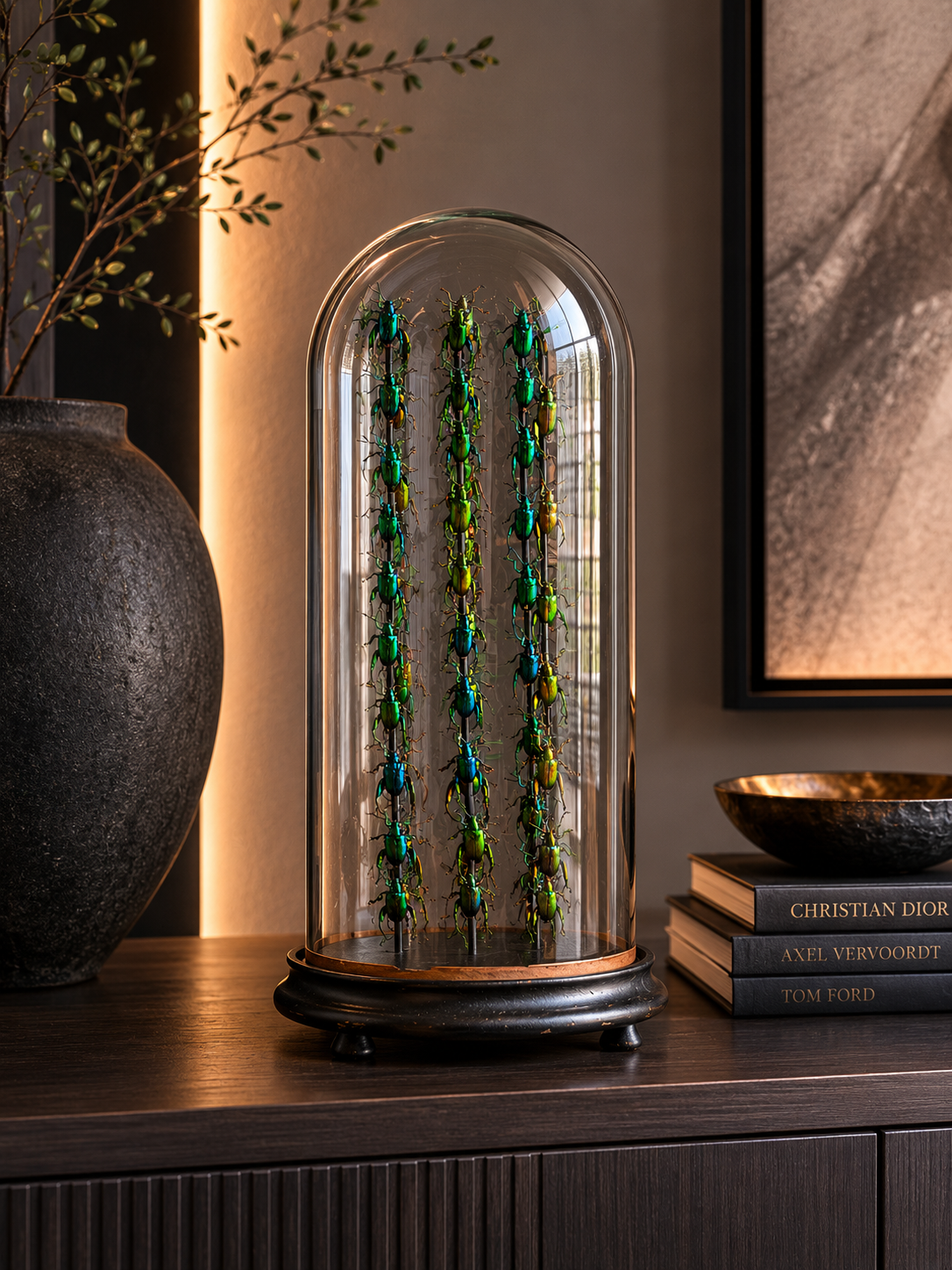
A dome of butterflies or beetles costs a fraction of a large mount, needs no wall work, is trivially easy to move while you decide where things live, and is sealed against dust and pests. It also tells you quickly whether you actually enjoy living with natural history objects or merely like the idea of them.
From there, the usual progression is a skull or a set of antlers, then a bird, then a shoulder mount. Full mounts are the last step, not the first — they are the hardest to place, the hardest to move and the hardest to sell on.
Buying well
Three questions settle most purchases:
- What is its condition? Look for splits at the seams, insect damage in the fur, and fading on the side that faced a window. Ask for photographs of the back and underside.
- How old is it, and where did it come from? Age affects both value and legality. Pieces predating modern conservation law are treated differently from recent work.
- Is it legal to sell and to own where you live? For most common European species this is straightforward. For protected and exotic species it is not, and the paperwork matters — see CITES and Article 10 certificates explained.
You can browse everything currently available in the full collection, or get in touch if you want help judging whether a specific piece suits a specific wall. We are happy to look at a photograph of the room before you commit.
Frequently asked questions
Does taxidermy suit a small flat? Yes, if you stay under glass or on the wall. Domes, framed insects and single skulls work in small rooms; full mounts do not.
Will it smell? A properly prepared and maintained piece has no odour. A persistent musty smell usually means damp or active insect damage, both of which are reasons to walk away.
Is antique taxidermy a good investment? Treat it as furniture rather than as an asset. Good pieces in good condition hold value well, but condition and provenance drive price far more than species alone.
How do I know a seller is reputable? They will tell you the age, the species and the origin without being pushed, and will put it in writing. Vagueness on any of those three is the warning sign.