Buying Taxidermy Legally and Ethically: The Complete Buyer's Guide
Most people considering their first piece of taxidermy have the same two worries, in this order: is this ethical, and is this legal?
They are good questions, and they have clear answers — but the answers are more specific than either “it’s all fine” or “it’s all problematic”. This guide sets out what actually governs the trade, what to ask before you buy, and where the genuine risks are.
Ethical sourcing: what the term actually means
“Ethically sourced” is used loosely enough to be nearly meaningless in marketing copy, so it is worth being precise. In practice, responsible dealers apply it to specimens from four origins:
Natural death. Animals that died of age, illness or accident, often from zoos, wildlife parks, breeders or private collections. Zoos in particular have long-standing arrangements to pass deceased animals to museums and preparators rather than destroy them.
Humane euthanasia. Veterinary end-of-life decisions, most commonly with birds and small mammals.
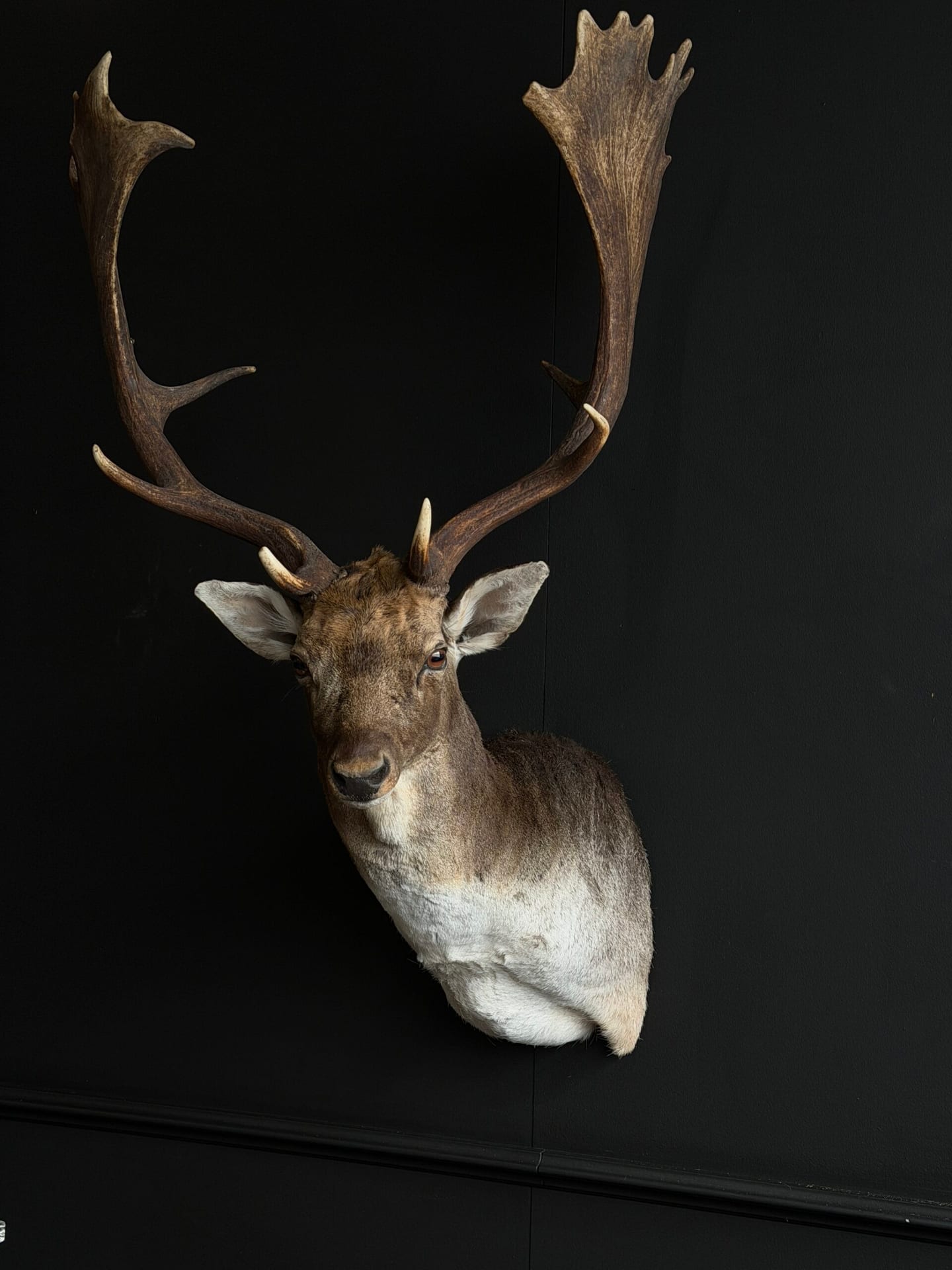
Regulated culling and population management. Deer management is the clearest example. European deer populations, absent natural predators, are actively managed by law in most countries; the animals are culled regardless of whether anyone wants the antlers. Using the by-product is not the reason the cull happens.
Vintage and antique stock. Pieces made decades or centuries ago. Nothing about buying them affects any living animal, and they are, in a straightforward sense, reuse.
Ethical sourcing means acquiring specimens that died naturally, were humanely euthanised, or came from legal and regulated culling aimed at population control — the common thread being that the animal’s death was not caused by demand for the object.
What falls outside it: anything hunted specifically for trophy sale, anything from an endangered population, and anything whose origin the seller cannot or will not describe.
Antique pieces are a different category
There is a reason so much of the trade is in older work.
A Victorian case of birds involves no living animal, no current hunting, and no demand signal to any supplier. Whatever your view of taxidermy as a practice, buying a 120-year-old piece does not cause more of it to happen. It also tends to be better made — the period’s leading preparators worked to standards that are difficult and expensive to match now.
The trade reflects this: most items offered for sale are classed as antique and predate the conservation laws covering their species, while anything newer is sold in compliance with CITES and national regulations, with Article 10 certificates or equivalent documentation where required.
The practical consequence is that age is not just a matter of taste or value. It changes the legal position of the object, which is why every serious seller should be able to tell you roughly when a piece was made.
The legal framework, briefly
Three layers apply, and they stack.
CITES — the Convention on International Trade in Endangered Species — is the international layer. It sorts species into three appendices by how threatened they are. Appendix I species are the most endangered and commercial international trade in them is essentially prohibited; Appendix II species may be traded under permit; Appendix III covers species a single country has asked others to help protect.
Regional law implements CITES and usually goes further. In the EU, the Wildlife Trade Regulations translate the appendices into Annexes A to D, and Annex A is stricter than CITES Appendix I alone. Annex A specimens generally require a certificate before they can legally be sold, displayed for sale or transported for sale — this is the “Article 10 certificate” you will see referenced. The UK operates an equivalent regime post-Brexit, documented in the government’s CITES guidance.
National and species-specific law adds further protections — nesting birds, birds of prey, native protected species, and in some countries specific rules about hunting trophies.
For most of what is actually traded — common European deer, farmed and common bird species, widespread insects, cattle hides — none of this creates an obstacle. The rules bite on protected, exotic and endangered species. The mechanics of which certificate applies to what are covered in CITES and Article 10 certificates explained.
What to ask before you buy
Five questions. A dealer who answers all five without hesitation is almost certainly fine; one who is vague on any of them is telling you something.
- What species is it? Not “a deer” — which deer. Species determines the entire legal position.
- How old is it, approximately? Pre-1947 pieces are treated as “worked specimens” under EU rules and are handled differently from recent work.
- Where did it come from? Zoo, estate, private collection, auction, house clearance. A real answer exists for every legitimate piece.
- Does it need documentation, and do you have it? For Annex A species the honest answer is yes, and the certificate should come with the piece.
- Will you put the species, age and origin in writing? This is the question that matters most. Anyone can say anything on the phone.
Reputable dealers are transparent about sourcing and expect to be asked. Being asked these questions is normal in this trade, not rude.
Warning signs
- Vagueness about species, particularly “some kind of antelope” for something clearly identifiable.
- No paperwork offered for an obviously protected species — birds of prey, owls, big cats, primates, sea turtles, and anything on the CITES appendices.
- A price that makes no sense. Genuinely rare specimens with valid documentation are expensive. A cheap one is either not what it claims to be or lacks the paperwork.
- “You don’t need any paperwork for this” offered unprompted about a protected species. Sometimes true for genuine antiques; frequently not.
- Pressure to buy immediately. Legitimate pieces do not evaporate.
- Cross-border shipping treated as trivial. Import and export are exactly where CITES rules apply most sharply, and getting it wrong means the piece is seized.
Buying across borders
This is where most avoidable trouble happens. A specimen that is entirely legal to own in one country can be illegal to import into another without permits, and customs seizures are not usually reversible.
If you are buying from abroad, establish before payment: whether the species requires an export permit from the origin country, whether it requires an import permit at the destination, and who is responsible for obtaining each. For Annex A material, both are normally required and both take time.
Within the EU, movement of Annex A specimens between member states still requires the specimen to be legally acquired and, for commercial use, certificated — the single market does not exempt wildlife trade.
What is straightforwardly fine
It is worth stating plainly, because the caution above can make the whole field sound fraught. The following are traded openly and legally across Europe, and represent the large majority of what people actually buy:
- Antlers and skulls from common deer species, and naturally shed antler
- Cow, sheep and goat hides, which are food-industry by-products
- Common insects under glass — see bell jars and glass domes
- Replicas and casts, which contain no animal material at all
- Antique mounted heads and birds of common species with documented provenance
If you want the object without any of the questions, replicas and casts are an honest answer — they are museum-quality, considerably cheaper, and involve nothing living at any point.
After you buy
Keep the paperwork. Certificates are specimen-specific and transfer with the object; losing one can make a legal piece unsaleable later.
Photograph the piece from several angles and store the images with the documentation and the purchase invoice. If you ever sell, insure or move it internationally, that file is what establishes provenance.
Then look after it properly — see how to care for taxidermy — and for placing it in a room, the companion guide to taxidermy in interior design.
Frequently asked questions
Is buying antique taxidermy ethical? It involves no living animal and creates no demand for new specimens. Most people who object to taxidermy in principle still distinguish antique pieces from new work.
Do I need a licence to own taxidermy? For common species, no. For Annex A species, a certificate is required for commercial activity — selling, offering for sale, or displaying commercially — rather than for private ownership as such.
Can I sell a piece I inherited? Usually yes, but check the species first. If it is a bird of prey, an owl or anything exotic, you likely need a certificate before offering it, even privately.
What if a piece has no paperwork but is clearly very old? Age can be a defence, but it needs evidence. Photographs, old auction records or an expert’s written opinion all help. Do not assume it is fine because it is old.
We are happy to answer questions about specific pieces, including origin and documentation, before you commit — get in touch or browse the current collection.